
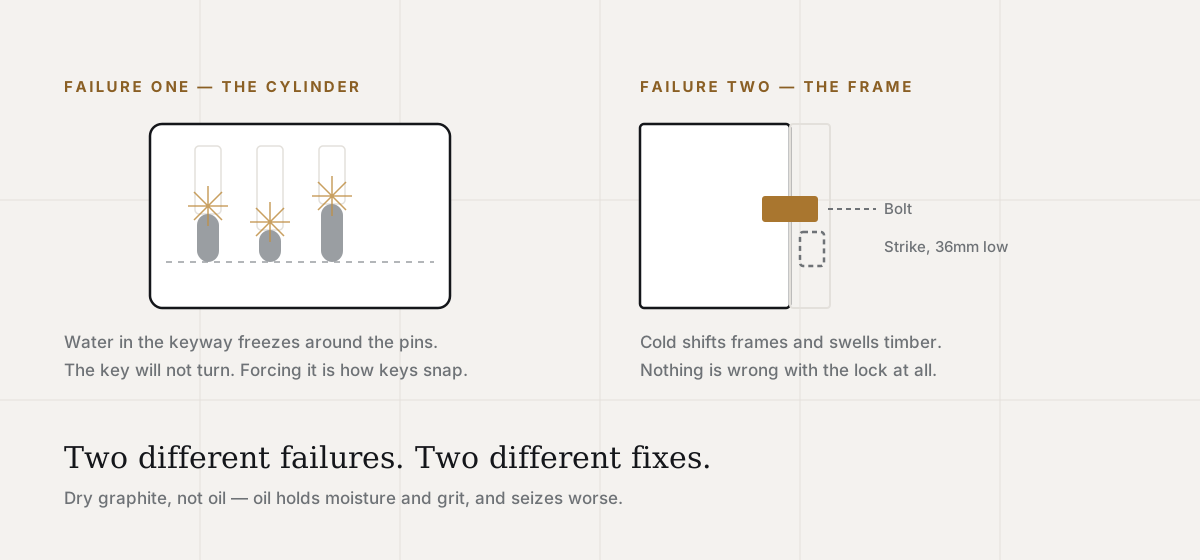
Tulsa winters are not consistently cold, and that is exactly the problem. Freezing rain, a thaw, then another hard freeze — moisture gets into a cylinder, freezes around the pins, and a lock that worked fine in November will not turn in January. We get a run of these calls every February.
Why locks fail in the cold
Two separate failures get reported as the same thing.
The cylinder is frozen. Water has worked into the keyway and frozen around the pin stack. The key goes in but will not turn, or turns partway and stops. Forcing it is how keys snap — cold metal is brittle, and a key that would flex in June will shear in February.
The door has moved. Temperature swings make frames shift and timber swell. The bolt no longer lines up with the strike, so the door binds, will not latch cleanly, or needs shouldering to lock. Nothing is wrong with the lock at all, and no amount of lubricant will fix it.
If the key will not turn
- Warm the key, not the lock. A few seconds in your hand or a pocket is enough. Do not pour hot water into a cylinder — it thaws, runs deeper, and refreezes worse.
- Do not force it. If it does not turn with normal pressure, it is not going to; you are just choosing where the key breaks.
- No open flame on the key. It works in films. In practice it ruins the key's temper and can damage the cylinder.
- Use the other door and deal with it in daylight.
Lubricant matters: use a dry graphite or PTFE lock lubricant. Oil-based sprays attract grit and hold moisture, so the lock works beautifully for a month and then seizes worse than before.
The ten-minute autumn checklist
- Lubricate every exterior cylinder with dry graphite before the first freeze.
- Check the weather stripping around each door — most water gets to the lock because the seal has failed.
- Test the spare keys. A worn spare that just about works in warm weather will not work in cold.
- Open and close each exterior door and watch the bolt meet the strike. Adjust or realign before the door is frozen shut and you are standing in it.
- Make sure you are not relying on one entrance. If the front door seizes, you want a second way in that you have actually tested.
When to call
A cylinder that seizes repeatedly is telling you something — usually that water is getting in somewhere and the fix is the seal or the alignment, not the lock. A key that has snapped off in the cylinder needs extraction rather than picking at it. And a door that has bound so badly it will not latch is a frame adjustment, which is the kind of work that is far cheaper before somebody forces it open.