
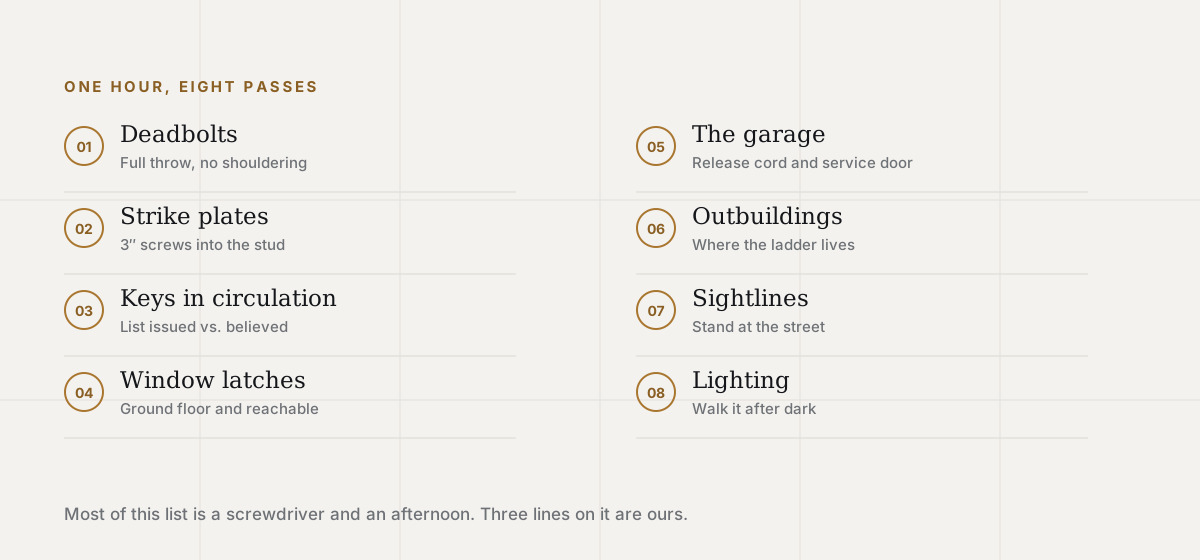
You do not need a consultant to find the weak points in a house. You need an hour, a notepad and a willingness to be honest about the door you have been meaning to fix since spring. Here is the walk-through we do, in the order we do it.
1. Deadbolts
At every exterior door: does the bolt throw fully, smoothly, without lifting or shouldering the door? A bolt that only goes partway is holding the door shut, not secure. Check the throw length too — anything under an inch is not doing much.
2. Strike plates
Open the door and look at the plate the bolt lands in. If it is held by two short screws into the trim, that is the failure point in almost every forced entry we see. Three-inch screws into the framing behind it, and the same door becomes genuinely difficult.
3. Keys in circulation
Write down every key you have issued and to whom. Then write down every key you think exists. If the second list is longer than the first, or you are not sure, that is the answer — rekey.
4. Windows and their latches
Every ground-floor window, plus anything reachable from a fence, a flat roof or an air-conditioning unit. Latches that no longer align, cracked sashes, and painted-shut windows that will not lock at all. Note them; they are usually a cheap fix.
5. The garage
Two doors here, and people only think about one. The overhead door usually has an emergency release that can be fished through the top gap with a coat hanger — a release-lock or a zip tie handles it. The service door from the garage into the house is very often builder-grade and unlocked, which makes the garage a lobby rather than a barrier.
6. Outbuildings
Sheds, detached garages, workshops. These get ignored, and they are where the ladder and the crowbar live. A thief does not need to bring tools if you have supplied them.
7. Landscaping and sightlines
Stand at the street. Can you see your own front door? If shrubs have grown over the windows, that screening works for whoever is trying the latch. Trim back anything that gives cover near a door or a ground-floor window, and make sure your house numbers are visible — that matters when you are the one who needs someone to find you fast.
8. Lighting
Walk the perimeter after dark. Dark corners at the side gate, over the back door, behind the garage. Motion-activated fixtures are more useful than a light left burning: a light that comes on is an event, a light that is always on is scenery.
Also worth doing while you are at it: test the smoke and carbon monoxide detectors, check the fire extinguisher gauge, and put battery changes on a schedule you will actually keep — the daylight-saving clock change works well.
What to do with the list
Most of what you just wrote down is a screwdriver and an afternoon. The strike plates, the window latches, the garage release, the shrubs, the bulbs — none of that needs a locksmith.
What is worth calling about is anything in the keys column, any deadbolt that does not throw properly, and any door frame that has taken damage. Those three are what we actually do, and they are the ones most likely to matter.