
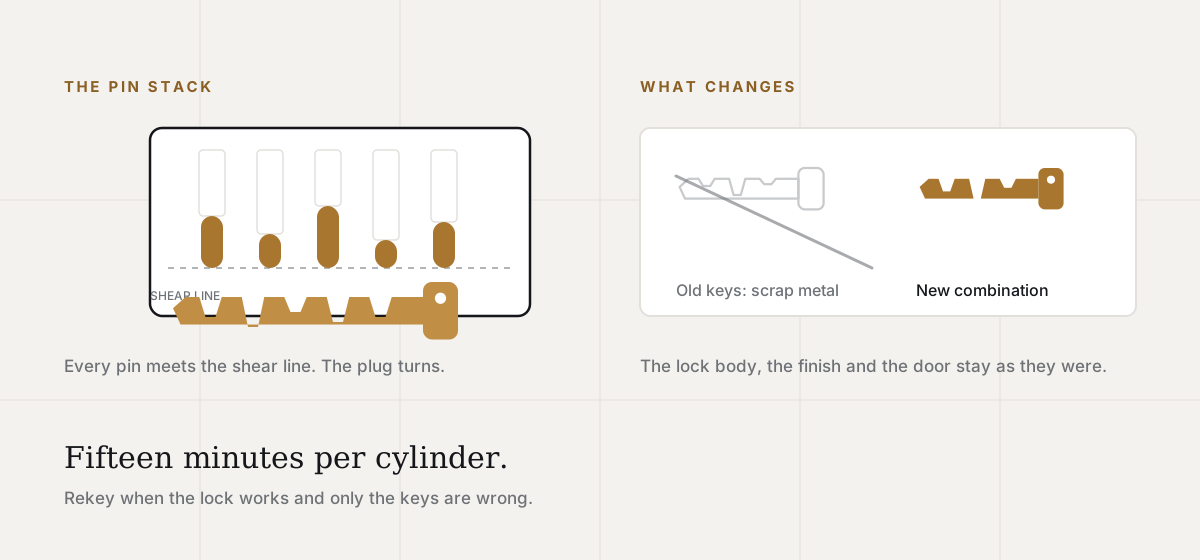
Rekeying is the cheapest way to make every existing key to a door stop working. It takes about fifteen minutes per cylinder, the lock never leaves the door, and when it is done the only keys that open it are the ones in your hand. Here is when it is the right call and when it is not.
What rekeying actually does
Inside the cylinder is a stack of small brass pins. Your key lifts each pin to a specific height; when all of them line up at the shear line, the plug turns. Rekeying replaces that combination with a different one and cuts new keys to match. The lock body, the finish, the strike, the hole in the door — none of it changes.
What changes is that every key cut to the old combination is now scrap metal. Permanently, not temporarily.
Five times you should rekey
- You cannot account for every key. Not "I think we have them all" — actually account for them. Most people cannot, and that is the whole point.
- A key was lost or stolen. Especially if it was on a ring with anything identifying: an address tag, a fob, a work badge.
- Somebody broke in, or tried. If keys were taken during a burglary, rekey the same day. A thief who has your key does not need to force anything the second time.
- You moved in. The previous owner, their agent, the cleaners, a contractor, the neighbour who watered the plants. Nobody kept a list.
- The old lock still works fine but the keys have multiplied. Three doors on three different keys usually becomes three doors on one key with no new hardware at all.
The short test: if the lock works properly and you only need different keys, rekey it. If the lock does not work properly, or you need it to do something it cannot currently do, replace it.
When rekeying is not the answer
Rekeying assumes the cylinder is mechanically sound. It will not help when the key has to be jiggled or lifted to work — that wear is in the plug, and fresh pins do not change the feel. It will not repair a cylinder that was forced. It will not turn residential-grade hardware into something that survives a commercial door used two hundred times a day. And it cannot add a feature the lock does not have: a keypad, a restricted keyway, a master key system, lever hardware for accessibility.
Occasionally we open a lock and find a keyway nobody has stocked blanks for in thirty years. That one gets replaced.
What it costs, honestly
Rekeying is materially cheaper than replacing, because you are paying for labour and a handful of pins rather than labour and a box of new locks. The variable is how many cylinders you have — remember a deadbolt and a knob are two cylinders on one door, so a "three door" job is often six.
The reason people get quoted replacement anyway comes down to two things, and only one of them is dishonest. Swapping a lock is faster and needs less skill than pinning one, so a busy shop or a technician without a pinning kit would rather sell hardware. The other reason is margin, and there is more of it in a box of locks than in twenty minutes of careful work.
On a commercial building it is a plan, not a task
If the building is master keyed, rekeying one cylinder without reference to the schedule is how a system gets quietly broken. Every cylinder has to answer to the correct change key and the correct master. We rekey to a written keying schedule and you keep a copy, so the next staff change does not require somebody to reverse-engineer what the last locksmith did.
What to have ready when you call
- How many doors, and how many cylinders per door.
- Whether you want everything on one key.
- Whether the building is master keyed.
- Roughly how old the hardware is, and the brand if it is stamped on the face.
With that we can usually quote it on the phone. Most residential rekeys are one short visit; commercial work gets scheduled around your hours.